

There’s a Japanese word you might already know: kawaii (かわいい). It’s an entire joyful cultural phenomena that seemingly celebrates cuteness, for cuteness’ sake. While some translate it to cute or adorable, kawaii is more than just aesthetic. The word carries a rebellious history and emotional weight that requires a more nuanced translation, closer to endearingly fragile or worthy of care.
The traditional way to write kawaii uses the kanji 可愛い, and the first character, 可, also appears in words meaning can or possible. Today, embracing kawaii in Japan looks like giving yourself permission to delight, attach a plush toy to your designer bag or squeal at coffee with the foam sculpted to resemble your own pet. However, it’s important to know the cultural roots of Kawaii go deeper than that and reflect what could be described as a feminist movement in post-war Japan.
Kawaii, with roots in Japanese “girl culture,” is known for a visual aesthetic of simplicity, hyper-cuteness, and childlike innocence. It was originally a space of safety and empowerment for disenfranchised groups in Japan. Student activists in the 1960s and ‘80s female shōjo fans used the playful subculture to rebel against rigid, nationalist hierarchies of aggression…This early version of kawaii was radical—an act of resistance wrapped in sweetness. – Isami McCowan
Recently, there has been a rise in the language of Inner Child Work, embracing and/or healing one’s inner child. Some recognize this as an anti-capitalist movement. The belief behind this phenomenon is that by reconnecting with the parts that once felt joy, wonder, and curiosity before being impacted by trauma and shaped by external expectations of adulthood you can heal yourself. Inner child work is a real therapeutic practice rooted in Jungian and humanistic psychology being reframed by social media and the TikTok generation.
Influencers and therapists alike encourage folks to reparent themselves through affirmations, self-care rituals, and playful reconnection with childhood joys. The practice resonates in a world where many adults feel overextended, alienated from joy, or pressured by capitalist expectations of productivity and perfectionism. For many, the idea of playing sounds like a whimsy fantasy and maybe even embarrassing or infantile. Where does one even start?
One way I have played and kept my world open is through frequent travel. My first adult travel experience that allowed me to drop into my lost wonder was on a solo trip to Stockholm at the age of 24. I had been working as a Kindergarten teacher in the South Bronx and it was an incredibly stressful and high-stakes job. I didn’t have the right experience or resources (more about that some other time) and children’s literacy was at stake.
One afternoon, I took the ferry to Gröna Lund and I rode almost every ride. This was not something I would imagine doing at home. I am afraid of heights, but the cotton candy sky of somewhere completely new let me escape what I would usually do and do something just because instead. I cried tears of pure elation watching the lights of the iconic Eclipse, Giant Wave Swinger as I ferried back to my hostel. I was cracked wide open by the realization that I was allowed to do what made me happy and follow my curiosity even though I was made nervous about traveling alone. I didn’t have the words for it, but I now recognize this unbridled happiness as a result of leaning away from inherited fear and into adventure, this very tender feeling surfacing was Kawaii, something to be protected and tended to.
Kawaii is what we in the West might consider childlike or even weak, but it isn’t. In Japan it is seen as pleasing expressions of vulnerability, softness, and emotionally honesty. When we remove the association of tender emotion with being a child, reconnecting with innocence and our own vulnerability as adults can be a profound gift to ourselves and an act of self-acceptance. This can be especially true if these emotions were devalued by your primary caretakers.
I saw this beautifully modeled in Japan’s kawaii culture. For many Japanese adults, kawaii is a lifelong self-embrace. This continuity reflects a cultural comfort with playfulness as self-expression, not regression. It blurs the boundary between childhood and adulthood, encouraging a recognition that innocence and joy need not be abandoned with age.
At the end of the day I love a Michelin-starred Omakase as much as the next gal, but… what are you even doing if you’re not having fun and getting a little silly on vacation. There’s plenty of serious stuff waiting for you when you get back home! I can confidently say that travel has helped heal parts of my inner child, the parts that desperately yearned for the adventure of a family outing and quality time spent together.
What’s more meaningful is challenging the expectations I have for myself and others have for me as I age into mid-life and consider what I want or deserve. It’s taken a lot of work to believe I am someone worth being protected and tended to. It took even more work to realize the person built for that job was me. Thinking and acting that way is a meaningful form of rebellion against what I have been told and takes work every damn day, but less so when I’m on vacation.
Here’s a handful of ways to embrace kawaii and play in Japan:

Visit the teamLab’s exhibitions
We visited Tokyo’s teamLab Planets and became one with the art. It’s like walking inside someone’s beautiful, technicolor acid trip barefoot. You’ll find yourself laughing, splashing, and forgetting to look composed. The museum doesn’t ask for reverence; it asks for wonder from adults and children alike.
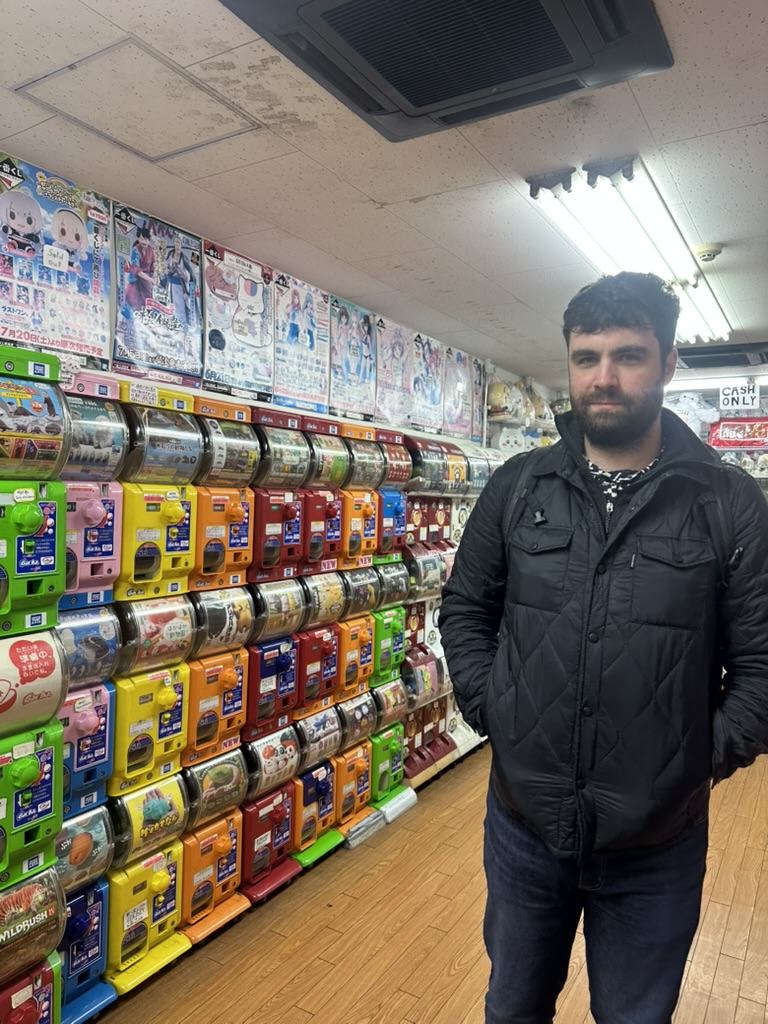
Spin the Gachapon Wheel
On the surface, gachapon machines are simple. You insert coins, twist the knob, and out pops a capsule with something tiny and absurd like a sushi cat or miniature cup of ramen. It’s not just about the trinket. It’s the anticipation and a pointless ritual based in total randomness that makes gachapon fun. These machines reminded me how exciting a little surprise can feel. You’ll find these in most cities outside shops, but we spotted large gachapon arcades in Tokyo and Nara!
Lose (and Win) in an Arcade
Japan’s arcades are electric temples of nostalgia. There are countless arcade games, claw machines stocked with plushies and classics like Dance Dance Revolution. Step inside and you’ll understand, joy here has no age limit. Here you can see me win a Snoopy dressed up as a piece of toast.

Step Into a Purikura Photobooth
If you want to meet your inner child face-to-face, do it in a purikura photobooth. These are not your average mall kiosks. The machine enlarges your eyes, smooths your skin, adds cartoon sparkles, and offers endless stickers and poses. You’ll laugh until your stomach hurts, then leave with glossy printouts for the fridge.

Rep Your Favorite Japanese Character
One of the easiest ways to tap into kawaii culture in Japan is to pick your mascot and wear it like a badge of honor. With all due respect to my history with Hello Kitty, mine is Gudetama, a lazy, melancholic egg yolk. While they’re technically a yolk, spiritually they are all of us. They’re always tired, swinging from being unbothered to woefully sensitive and sometimes draped in bacon as their blanket (something we mere mortals can only aspire to).
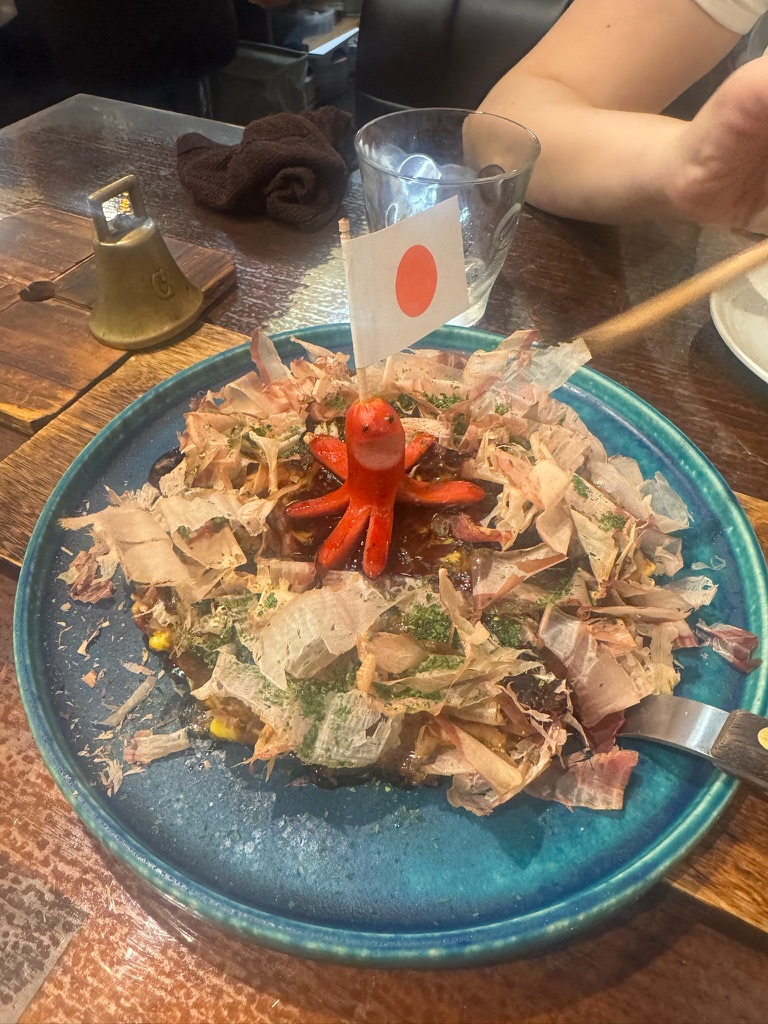
Dinner With a Sense of Humor at Tepan Tavern Tenamonya, Kyoto
Tepan Tavern in Kyoto feels like the elevated version of playing with your food. This teppanyaki joint is run by the friendliest husband-and-wife duo, Hideki-san and Naoko-san. The experience is equal parts theater and hospitality. The magic of Tepan Tavern is how playful presentation meets seriously good food (A5 beef being one of the house specialties), while observing how the owners take pride in every last detail. It’s the kind of experience that makes your heart swell and want to lick your plate clean giving us proof that joy and good food belong at the same table. It’s a small operation, so be sure to MAKE A RESERVATION! I won’t ruin their bits for you!
Please comment with your favorite kawaii experiences, and like I said, everything serious will be waiting for you back at home…

Leave a comment