

- Where To Begin: Planning
- My High-Level of My Trip Itinerary
- Tokyo Airport Snacks and Transportation
- ✈️ Japan’s Luggage Shipping: Reliable, Effortless, and Surprisingly Affordable
- 🚄 Train Travel in Japan — Effortless, Efficient, and Beautifully Organized
Where To Begin: Planning
Planning a trip to Japan can be totally overwhelming. I’m here to tell you there’s no one right way to plan a trip. The best case scenario is that everyone’s itinerary will look a little different. Japan is one of those places where when I dove into the research and reminded myself to zoom out and turned my attention to what excited me instead of the anxiety of not missing any “must do” or “top 10 things..” Japan is one of those countries where you simply can’t do it all (there’s a 90 day visitor limit after all…).
In my opinion trying to do it all will detract from your experience of the place. One of my favorite things about Japan is how deliberate everything seems. Once I channeled my excitement into creating a personalized itinerary filled with things I thought my husband and I would love I was in business. It goes without saying this is not a highlights tour itinerary, this is a collection of places and experiences that my husband and I found worth it for us.
If you’re drawn to the classic “first-timer” itineraries — Tokyo, Kyoto, Osaka, Hiroshima…go for it. They exist for a reason. But if you find yourself curious about lesser-known towns, a slower travel rhythm, or detours that feel a bit more unique, lean into that. You’ll be amazed at where that curiosity will take you. Some of my favorite experiences in Japan happened because I ignored the standard itinerary and followed what felt right.
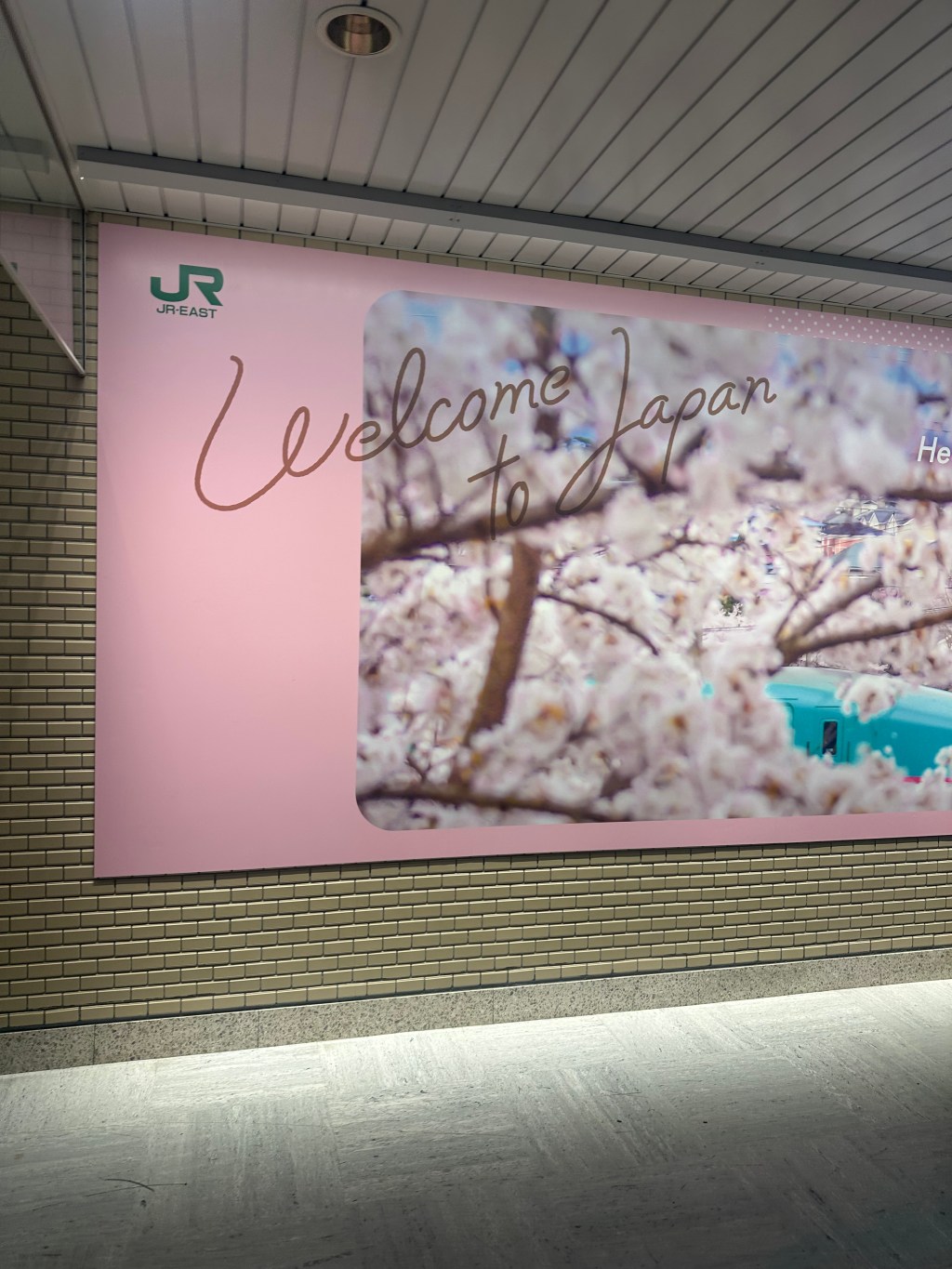
I still prioritized must-sees that felt like must-sees for me, you’ll hear about our detour to Himeji Castle later on. I also made space for what felt relaxing and restful. It had always been a dream of mine to visit during cherry blossom season, so that shaped a lot of my choices. I wanted to balance beauty with calm, and I knew I needed time to slow down and soak it all in.
That meant not spending less than two nights in any city. It meant a little of time on trains which, honestly, became part of the adventure. I was nervous about that, but was pleasantly surprised by the experienced ease of Japan’s transportation system living up to its reputation. I was nervous about it at first, but found it surprisingly intuitive. The result? My first trip was intentional, inspiring, and specific to us! And a great start on my next Japan itinerary…
My High-Level of My Trip Itinerary
Over two unforgettable weeks, my husband and I set out traveling Japan chasing delicious meals and cherry blossoms from city to coast.
First Stop, Tokyo. We split our stay in Tokyo into two bookends around our flight. We began with 4 nights in Tokyo, diving into the city’s electric energy. I liked the idea of splitting up our exploration of this huge city in bursts.
Then, we headed south on the Shinkansen (bullet train) through Kyoto to Nara. We spent two nights in Nara where deer roamed freely beneath the petals. Nara was sleepier, even during peak season, but Tōdai-ji and some unexpected bites makes it worth the trip. We kept ourselves busy with sightseeing and a day hike to one of Japan’s most celebrated cherry blossom sites.
Next came a dose of art and architecture on the island of Naoshima, a tranquil escape filled with contemporary museums and quiet coastal walks. On our way to Kyoto, we made a stop in Himeji to explore its magnificent white castle — perfectly framed by rows of flowering cherry trees and picnicking revelers.
In Kyoto, we wandered through traditional streets, visited centuries-old temples, and watched petals float along the Philosopher’s Path. By then we were ready for a break and continued to Kinosaki Onsen, soaking in the town’s seven hot springs and savoring slow, restorative moments at a traditional Japanese-style inn with over 165 years of history.
Our journey came full circle back in Tokyo, where we spent our final day making up for lost time and reflecting on two weeks of springtime magic, a true hanami adventure across Japan.
Tokyo Airport Snacks and Transportation

Our direct flight from Newark to Airport with United was just as long as expected, but when I landed in Tokyo I caught a second wind. First things first, grabbing some snackies at the airport train stations’ 7Eleven. Time to try the infamous egg sandwich everyone has been going on about and onigiri to test my very American scepticism about buying any perishable food from a convenience store. Much to my surprise, it had not been overhyped and I learned very quickly I had some work to do on my onigiri unwrapping.
Instead of buying a physical PASMO or Suica card at the station, we set it up digitally on our iPhone Wallet. It couldn’t have been easier:
How to Get a PASMO on iPhone

- Open Apple Wallet on your iPhone.
- Tap the “+” sign to add a new card.
- Select “Travel Card” and then choose PASMO. (You’ll also see Suica — either works the same way for trains, buses, and even some vending machines.)
- Add money with your Apple Pay credit or debit card. You can start small, like ¥2,000 and top it up anytime.
- Once it’s set up, just hold your phone near the train gate reader — no need to unlock the phone or open the app.
We were able to use the same PASMO card not only for airport trains but also for the subway, JR lines, and even at some convenience stores for snacks and drinks. It made getting around Tokyo absolutely seamless — no fumbling for tickets or worrying about exact change.
From Haneda Airport (HND) → Central Tokyo (Ginza)
- Tokyo Monorail + JR Yamanote Line: ~¥660–¥700 (~$4–5 USD). Total time ~30–35 minutes.
- Keikyu Line: ~¥500 (~$3.50 USD). Also about 30–40 minutes, usually with one transfer to Ginza.
Airport Limousine Bus (alternative to train): ~¥950–¥1,200 (~$6–8 USD) direct to Ginza hotels, but traffic can be unpredictable so choose a reliable service with a flat rate here.
✈️ Japan’s Luggage Shipping: Reliable, Effortless, and Surprisingly Affordable
Japan’s luggage shipping system (“takkyubin”) is one of the most convenient and reliable travel services in the world. Whether you’re hopping between cities or heading straight to the airport, you can hand off your bags at your hotel, a convenience store, or a dedicated counter and they’ll arrive at your next destination the next day (or even the same day) like clockwork. I shipped my larger bag from Tokyo to Kyoto to Tokyo so I could travel lightly in between. When I arrived, they were waiting for me in my room. I did this at my hotel front desk.
The service is remarkably reliable, with near-perfect delivery rates, detailed tracking, and courteous support. Companies like Yamato (the Black Cat) and Sagawa Express run the network with the same precision Japan is famous for—clean, punctual, and seamless. It’s also surprisingly cheap: shipping a full-size suitcase usually costs around ¥2,000–¥3,000 ($12–$20 USD).
🚄 Train Travel in Japan — Effortless, Efficient, and Beautifully Organized
Train travel in Japan is unbelievably easy, clean, punctual, and intuitive even for first-time visitors. Signs are clear, staff are helpful, and everything runs exactly when it says it will. Whether it’s a local commuter line or the famous Shinkansen bullet train, the experience feels like the gold standard of public transportation.
1. Start With the JR Pass Decision
Decide early if the Japan Rail Pass (or regional JR passes) makes sense for your route.
- If you’re covering long distances (Tokyo → Kyoto → Osaka → Hiroshima), it often pays for itself in 2–3 rides.
- If you’re staying mainly within one region (e.g., Kansai or Kanto), regional passes or individual tickets are usually better value.
💡 Pro tip: You can now buy JR Passes inside Japan, but they’re cheaper if purchased before arrival.
2. Buy tickets ahead, but not too far ahead
One tip I can’t recommend enough: book your train out of each city the moment you arrive. It sounds small, but it completely changes the rhythm of your trip. By locking in your next route early, you skip the stress of last-minute ticket buying and potential crowds at peak hours. This also ensures you can choose your seat on the Fuji side (transportation employees usually do this for you if they know you are a tourist, which is sweet) for iconic, postcard-perfect views of Mount Fuji between Tokyo and Kyoto.
The whole process takes minutes: you can reserve tickets at any JR counter, station kiosk, or even online, and you’ll have your seat guaranteed and itinerary set before your next journey begins. It’s one of those subtle travel hacks that makes moving through Japan feel as seamless as the country itself.
3. Mind the Manners
Japan runs on quiet respect:
Return trays, separate trash, and bow back when thanked.
These small gestures mean a lot.
Keep voices low on trains.
Handle cash and cards with two hands.
4. Silly and Delightful: Shinkansen Coffee
Enjoy your travels and take in all of the wonderful Japanese snacks and beverages inside train stations. One of my big “Japan is soooo cool!” moments was when a vending machine made me this very pleasant coffee. I felt a tinge of sadness that this is an impossibility in New York transit.


Leave a comment